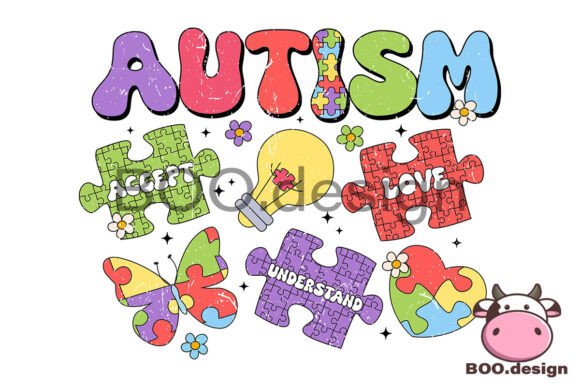
Retro Autism Png, Autism Puzzle Pieces
As a designer who spends half my life staring at digitized files and the other half watching my embroidery machine stitch them out, I have developed a certain level of skepticism when it comes to digital assets. We all know that what looks crisp on a 300dpi PNG screen does not always translate cleanly to fabric. When I first pulled up Retro Autism Png, Autism Puzzle Pieces from BOOdesign, I wasn’t just looking for a pretty image; I was evaluating its viability as a machine embroidery design for real-world applications. This is an T-Shirt Designs category graphic, but in my studio, everything starts with the question: will this hold up under the needle?
The First Impression: Mood and Visual Personality
The moment you open the file, the "retro" aspect jumps out. It isn’t trying to be modern or minimalist; it leans into a nostalgic aesthetic that feels warm, approachable, and slightly playful. The puzzle piece motif is iconic, yet the specific rendering here gives it a softer, more vintage character than the harsh, geometric versions we often see flooding the market. For an embroidery project, this mood is crucial. It suggests a product that is meant to be loved, worn, and displayed, rather than just another generic awareness item.
Visually, the layout is balanced. There is enough negative space around the central elements to allow for clean stitching without feeling cramped. This is a vital consideration for any embroidery file. If the details are too dense or the spacing too tight, you risk thread breaks and a muddy final look. Here, the design breathes. It feels like it belongs on a soft cotton tee, a sturdy canvas tote, or perhaps a cozy baby blanket. The visual personality says "handmade," which is exactly what buyers on Etsy and at craft fairs are looking for.
Real-World Application: From Screen to Stitch
Let’s talk about how this actually performs when it leaves the computer screen. I recently had a client request a custom embroidered tote bag for a local autism support group fundraiser. They wanted something meaningful but not overly clinical. Retro Autism Png, Autism Puzzle Pieces fit that brief perfectly. Because the source is a high-resolution PNG (300dpi), the edges are sharp, which makes tracing or using it as a guide for applique much easier.
If you are planning to use this as a tote bag design, the contrast levels work well against neutral fabrics like beige, olive, or denim blue. However, if you are considering sweatshirt embroidery for a boutique line, you need to be mindful of the background color. The retro palette likely includes muted tones, so placing it on a dark navy or black garment might require careful thread selection to ensure the design pops. I tested a mockup on a heather grey fabric, and the vintage vibe really came through, giving the finished product a premium, curated feel.
This design also shines in smaller formats. I envision it working beautifully as an embroidered patch for a denim jacket or a cap. The puzzle pieces are distinct enough that even when scaled down, they retain their identity. For baby embroidery, such as on a onesie or a muslin cloth, the softness of the retro style is gentle and appropriate. It avoids the starkness of high-contrast graphics, making it a safer choice for sensitive skin and young children.
Where Caution Is Required
No design is perfect for every situation, and being honest about limitations is part of professional practice. While Retro Autism Png, Autism Puzzle Pieces is versatile, there are specific scenarios where you should proceed with care.
- Small Hoop Sizes: If you plan to digitize this for a very small hoop (under 4x4 inches), you may lose some of the subtle texture in the puzzle pieces. The finer details might get lost in the stitching, turning into solid blobs of color. Always test on scrap fabric first.
- Textured Fabrics: Embroidering on bouclé, heavy chenille, or highly textured knits can obscure the design. The puzzle pieces rely on clear definition, and a bumpy fabric surface can ruin that clarity. Stick to smooth cottons, linens, or stable blends for the best results.
- Stretchy Fabrics: If you are working with jersey or spandex blends, proper stabilizer usage is non-negotiable. Without it, the tension of the stitches can pucker the fabric, distorting the retro shapes. A cut-away stabilizer is recommended for durability.
- Dense Stitch Areas: If your digitizing process involves heavy fill stitches for the puzzle pieces, be aware that thick layers of thread can make the garment stiff. For items like kitchen towels or aprons, this stiffness might be acceptable, but for wearable apparel, lighter stitch densities or satin stitch outlines might provide a better drape.
Impact on Product Value and Branding
For Etsy sellers and small shop owners, the difference between a good listing and a great one often comes down to presentation. Using a design like Retro Autism Png, Autism Puzzle Pieces allows you to create printable mockups that look authentic and professional. The retro aesthetic aligns well with current trends in handmade goods, where consumers are drawn to items that feel personal and thoughtfully designed.
When customers see a finished product featuring this design, they perceive higher value because the imagery is recognizable yet unique. It signals that the seller understands the nuance of the subject matter. Whether you are creating holiday embroidery gifts, wedding favors, or everyday custom apparel, this design adds a layer of emotional connection. It transforms a simple commodity into a personalized gift that carries meaning.
Furthermore, the versatility of the graphic supports strong brand consistency. You can use variations of this design across different products—matching patches on caps with embroidery on tote bags—to build a cohesive collection. This is especially effective for commercial embroidery businesses looking to expand their catalog without sacrificing quality.
Practical Designer Notes for Success
Before you upload this to your machine or start cutting fabric, keep these practical tips in mind to ensure your finished product meets professional standards:
- Check Thread Color Contrast: Since this is a PNG download, you control the color conversion. Choose thread colors that complement the retro vibe. Earth tones, muted pastels, or classic primary colors work well. Avoid neon threads unless you are intentionally going for a modern twist.
- Review Stitch Density: If you are converting this yourself, pay attention to the stitch density. Too much density leads to bulk; too little leads to transparency. Aim for a balance that allows the fabric texture to show through slightly, enhancing the handmade feel.
- Inspect Small Details: Zoom in on the puzzle piece corners. Are they rounded or jagged? Ensure your digitizing software preserves these nuances. Sharp corners can look cheap in embroidery if not handled with precise satin stitches.
- Test in Black and White: Convert your design to grayscale to check the contrast balance. If the design disappears in monochrome, it will likely struggle on low-contrast fabrics.
- Confirm Licensing: As this is a digital embroidery file or graphic asset, always review the license terms provided by BOOdesign. Determine if you are allowed to sell finished items made from this design. This is critical for avoiding legal issues and maintaining trust with your customers.
In conclusion, Retro Autism Png, Autism Puzzle Pieces is a thoughtful, well-composed graphic that translates well to embroidery when used with intention. It offers the right blend of nostalgia and clarity to appeal to a wide audience. Whether you are making a single personalized gift for a friend or building a craft business around autism awareness merchandise, this design provides a solid foundation for creating beautiful, meaningful work. Just remember to respect the fabric, choose your threads wisely, and always test before you commit.