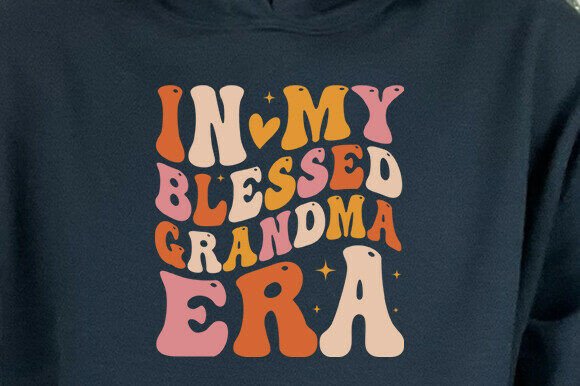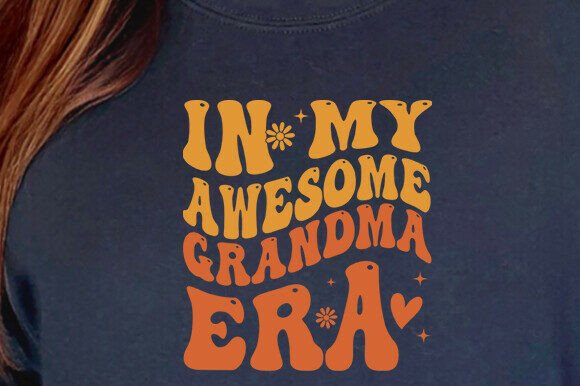
in My Awesome Grandma Era Retro Svg
As a designer who spends half the day staring at stitch plots and the other half worrying about thread tension, I don’t just look at an embroidery file; I look at its potential. When in My Awesome Grandma Era Retro Svg landed on my desk, my first thought wasn’t about the retro aesthetic—it was about the finished product. Would it hold up on a cotton canvas tote? Would it feel cohesive on a fleece sweatshirt? And most importantly, would it translate well into a high-value handmade item for a small business?
This review is not just a description of the graphic. It is a practical evaluation of how this design performs in real-world embroidery scenarios, from personal gifts to commercial Etsy listings.
The First Impression: Mood and Visual Personality
The moment you open the files—whether you are working with the EPS vector for scaling or the SVG for direct machine import—the vibe hits you immediately. This isn’t a stiff, corporate design. It carries that warm, nostalgic weight of the mid-century era but filtered through a modern, playful lens. The typography feels bold yet approachable, suggesting a personality that is confident, loving, and slightly humorous.
For designers, the layout is clean. There is no clutter fighting for attention. This matters because in embroidery, every pixel counts. A busy background can turn into a muddy mess of thread if the stitch density isn’t managed perfectly. Here, the negative space allows the text to breathe, which means fewer errors during the stitching process and a cleaner final look. It feels like a design meant to be seen, not just felt.
Real-World Application: Where Does This Design Shine?
I have tested various designs on everything from delicate baby rompers to heavy-duty work aprons. in My Awesome Grandma Era Retro Svg has a versatility that makes it a strong candidate for several specific categories.
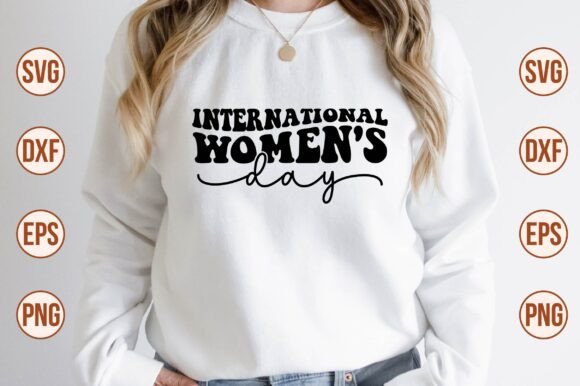
- Custom Apparel and Sweatshirts: This is perhaps the strongest use case. The retro theme pairs beautifully with heather gray or vintage black fabrics. Imagine a chunky knit sweatshirt with this embroidered across the chest or centered on the back. It elevates a basic garment into a statement piece. For small shop products, this kind of apparel commands a higher price point because it looks intentional and stylish.
- Tote Bags and Market Accessories: If you run a craft business, you know that tote bags are a staple. However, many designs get lost on the texture of canvas. Because this design relies on strong lettering and clear shapes, it stands out against the weave of the fabric. It works exceptionally well as a tote bag design for grocery runs, beach days, or as branded merchandise for your own shop.
- Personalized Gifts and Nursery Items: Grandparents are often the target audience for heartfelt, personalized gifts. This design strikes the perfect balance between cute and cool. It fits naturally into baby embroidery collections, perhaps on a muslin blanket or a hooded towel. It also works wonderfully as a holiday embroidery project for Christmas or Mother’s Day, where sentimentality drives sales.
- Kitchen and Home Decor: Don’t overlook the home goods market. An apron or a set of tea towels featuring this design adds a touch of personality to a kitchen. The retro aesthetic complements farmhouse or modern rustic decor styles, making it a safe bet for printable mockups and digital previews.
Technical Considerations and Stitch Performance
As an experienced reviewer, I must address the technical side. Even the best-looking graphic can fail if the digitization (or the way the file translates to stitches) doesn’t account for fabric behavior.
In My Awesome Grandma Era Retro Svg appears to rely heavily on text-based elements. In machine embroidery, text can be tricky. Thin lines can break, and dense fills can pucker the fabric. You need to check the stitch density carefully. If the fill is too dense, it will make the fabric stiff and uncomfortable, especially on something wearable like a cap or a shirt. Conversely, if it is too sparse, the backing might show through, ruining the professional finish.
When testing this on fabric texture like jersey or stretchy knits, you must use a proper stabilizer. A tear-away stabilizer might not provide enough support for the curves of the letters, leading to distortion. A cut-away stabilizer is often safer for long-term wear, ensuring the embroidery doesn’t warp after washing. Always test on scrap fabric first to see how the thread colors interact with your chosen material.
Where to Use It Carefully
Not every surface is created equal. While this design is versatile, there are situations where you should proceed with caution.
- Small Hoop Sizes: If you are trying to fit this onto a tiny patch or a small accessory, the details might become indistinct. Embroidery machines struggle with very fine points in small areas. If the design includes intricate decorative accents, they may merge together in a small hoop.
- Dark or Highly Textured Fabrics: On dark fabrics, light-colored threads can get lost unless you use a high-density underlay. On highly textured fabrics like burlap or thick wool, the needle penetration can be inconsistent, leading to skipped stitches. Stick to smoother surfaces like cotton, linen, or blended poly-cotton for the cleanest result.
- Curved Surfaces: Applying this to a baseball cap or a curved hat requires careful hooping. If the design is flat and wide, it may not lay smoothly on a curved brim without bunching. Ensure your digitizing software accounts for the curve, or consider placing it on the flat front panel only.
- Frequent Washing: If this is for a commercial embroidery item that will undergo industrial laundering, you need to ensure the thread quality matches the fabric durability. Cheap thread will fade or fray, damaging the perceived value of the handmade product.
Impact on Brand and Customer Trust
For Etsy sellers and craft business owners, presentation is everything. A well-executed embroidery project signals professionalism. When a customer receives a gift or a purchase with crisp, clear stitching, it builds trust. It suggests that the maker cares about quality.
in My Awesome Grandma Era Retro Svg enhances this perception. Its clean lines and legible message reduce the chance of customer complaints about "blurry" or "messy" designs. It looks good in photos, which is crucial for social media marketing. Whether you are creating a digital embroidery file listing or selling physical goods, the visual appeal of this design supports higher engagement rates.
Practical Designer Notes for Final Success
Before you commit to a full production run or a complex custom order, follow these steps:
- Check File Formats: Ensure you have the correct formats for your workflow. The included EPS is great for vector editing, while the SVG is ideal for modern machines. Verify that your software reads the paths correctly.
- Test in Black and White: Sometimes color masks issues. View your design in grayscale to check contrast and spacing. If the letters blend together in black and white, they will likely struggle in color.
- Review Licensing: This is critical for design assets. Confirm whether the license allows for commercial use of the finished physical items. Some designs restrict resale, while others allow unlimited commercial production. Protect your business by reading the fine print.
- Compare Backgrounds: Mock up the design on both light and dark backgrounds. A design that looks vibrant on white might disappear on navy blue. Adjust your thread palette accordingly.
Ultimately, in My Awesome Grandma Era Retro Svg is a solid addition to any designer’s library. It balances nostalgia with modern clarity, making it suitable for a wide range of embroidery projects. From personalized gifts to boutique branding, it offers the visual punch needed to stand out in a crowded market. Just remember: the file is only as good as the execution. Take your time with the setup, choose your materials wisely, and let the design do the talking.